
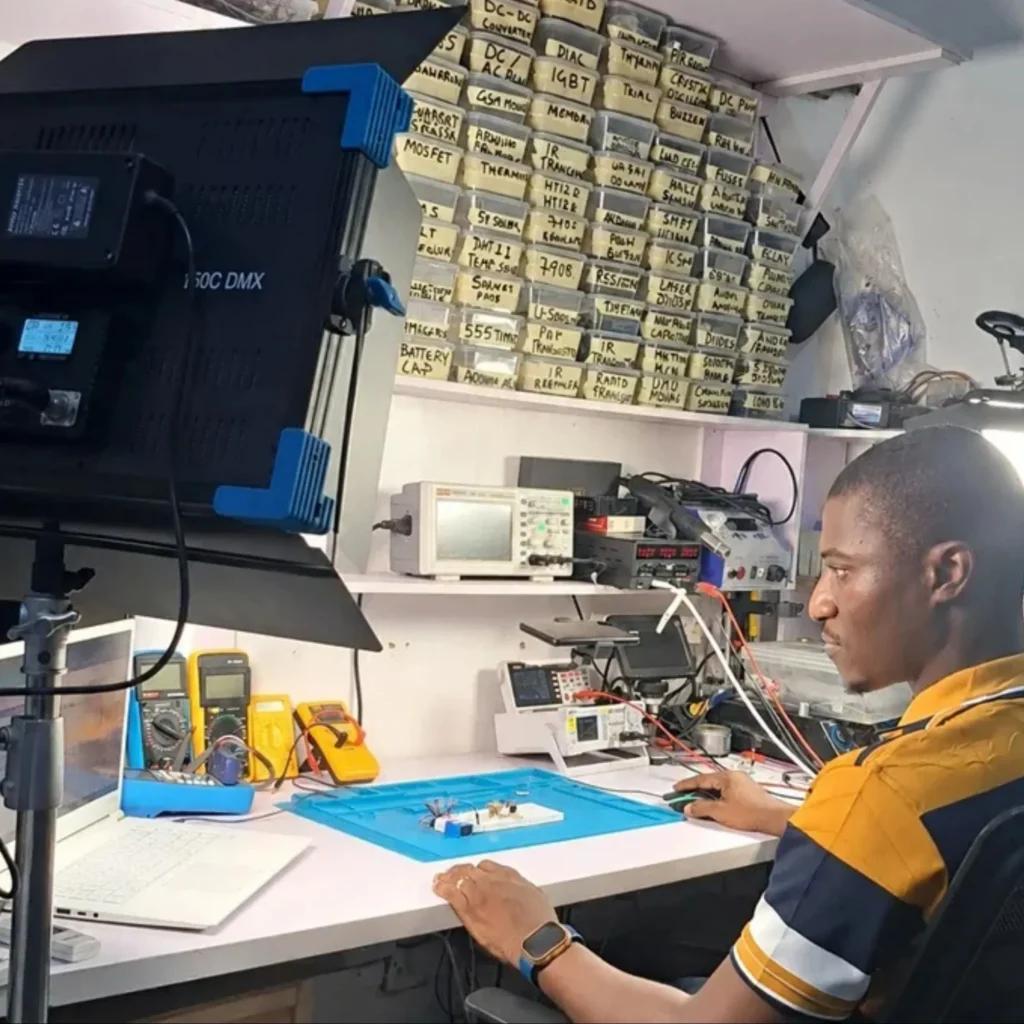

Daniel
Before my internship at Ettronics Hightech Limited, my engineering knowledge was purely theoretical, I couldn't connect an LED to a battery on a breadboard. Their applied electronics program transformed me into a confident engineer by teaching not just the steps, but the reasoning behind every concept from the very basics. Beyond practical skills, I also learnt how to collaborate effectively with my peers. Ettronics Hightech reignited my passion for engineering through their patient mentorship and hands-on approach. I highly recommend their program to every Nigerian student out there who's looking to get into hands-on and practical knowledge, I promise you it's life changing.

John
My training experience at Ettronics Hightech was truly valuable. The instructors were knowledgeable and supportive, and the hands-on practical sessions helped me understand electronic components and circuits better. It was a great environment for learning and building real technical skills.

Emmanuel
During my time at Ettronics Hightech training, I learned how to build electronic devices using various electronic components.
After completing the training, I developed a solid understanding of how to use Arduino and was able to apply it to create several electronic projects. For example, I successfully built a smart bulb that can be controlled wirelessly using an Arduino and a smartphone.

Abigail
I had an incredible experience interning at Ettronics Hightech! I'm grateful for the opportunity to have worked with such a talented team. They equipped me with hands-on skills in circuit design, Arduino programming, and PCB design, which I've applied to various projects.
From designing visitor guides to mastering industrial-grade component sourcing, I was impressed with the level of expertise and guidance I received. My experience at Ettronics Hightech has given me the confidence to take on new challenges and contribute to the electronics industry.

Ifeanyi
What I really loved about Ettronics Hightech was the environment and private learning space. The Instructor was very patient and really knows his stuff! Learning from him was so much fun. Ettronics Hightech is just very welcoming. I highly recommend if you want to level up your skills in a safe, fun and peaceful learning environment

Maduabuchi
My experiences gained at Ettronics HighTech Limited during my Internship
- I gained basic knowledge aided to digital, analog and embedded electronics.
- I gained Hands on experience on the use of laboratory equipments for research and training. purposes
- I saw the theoretical applications of class theories into practical terms and the application that comes with it.

Amaka
My internship experience at Ettronics Hightech Limited has been truly valuable. It’s a great place for hands-on learning in electronics, embedded systems, robotics, and innovative technologies. The experience has helped me strengthen my technical knowledge and better understand how engineering concepts are applied in real-world situations. I’m grateful for the opportunity to learn and grow with such a supportive and innovative team.

Ifeanyi
Before Ettronics Hightech, I knew absolutely nothing about practical or applied electronics, I just knew about the theory. What I loved most was how they took their time with me, starting from the very basics and building up gradually, making sure I truly understood before moving forward.
The practical sessions were thorough and well-structured, and I was pleasantly surprised to also learn prompt engineering. It felt less like a class and more like a personal mentorship experience.
Before starting I said, "I just wanted to be a better man" now I can beat my chest and say that I left as a better man.
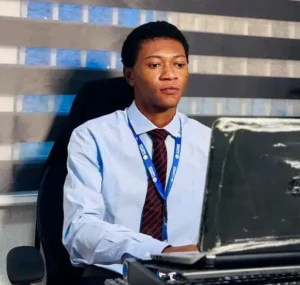
Michael
My training at Ettronics HighTech was a transformative learning experience. The program combined strong theoretical" foundations with hands-on, practical training in electronics and embedded systems, providing real-world exposure that significantly strengthened my technical competence.
Through the mentorship and structured learning environment, I developed deeper problem-solving skills and the confidence to design and implement innovative hardware solutions. Ettronics HighTech is truly committed to raising the next generation of skilled technology professionals, and I’m proud to have been part of that experience.

Ikechukwu
My IT at Ettronics Hightech Limited was a great and impactful experience for me. During my time there, I was opportune to gain practical and technical experience in electronics, especially working with Arduino based electronics projects which improved my understanding beyond the cloud of theoretical electronics. The experience helped me become confident in practical electronics.
I’m truly grateful for the opportunity to learn at Ettronics Hightech Limited

Jamiu
Completing my Industrial Training at Ettronics Hightech Limited was a truly valuable experience. During my time with the company, I gained practical, hands-on exposure to real-world technical projects and learned from professionals who were always willing to share their knowledge. The supportive and innovative environment made it easy to grow both technically and professionally. My training at Ettronics Hightech Limited has played an important role in strengthening my skills and preparing me for a career in the technology industry.